Dive into the world of landscaping
Welcome to the CoVegLLC blog, your go-to resource for expert advice and inspiration in the landscaping world. Explore our latest articles and discover how to create the garden of your dreams.
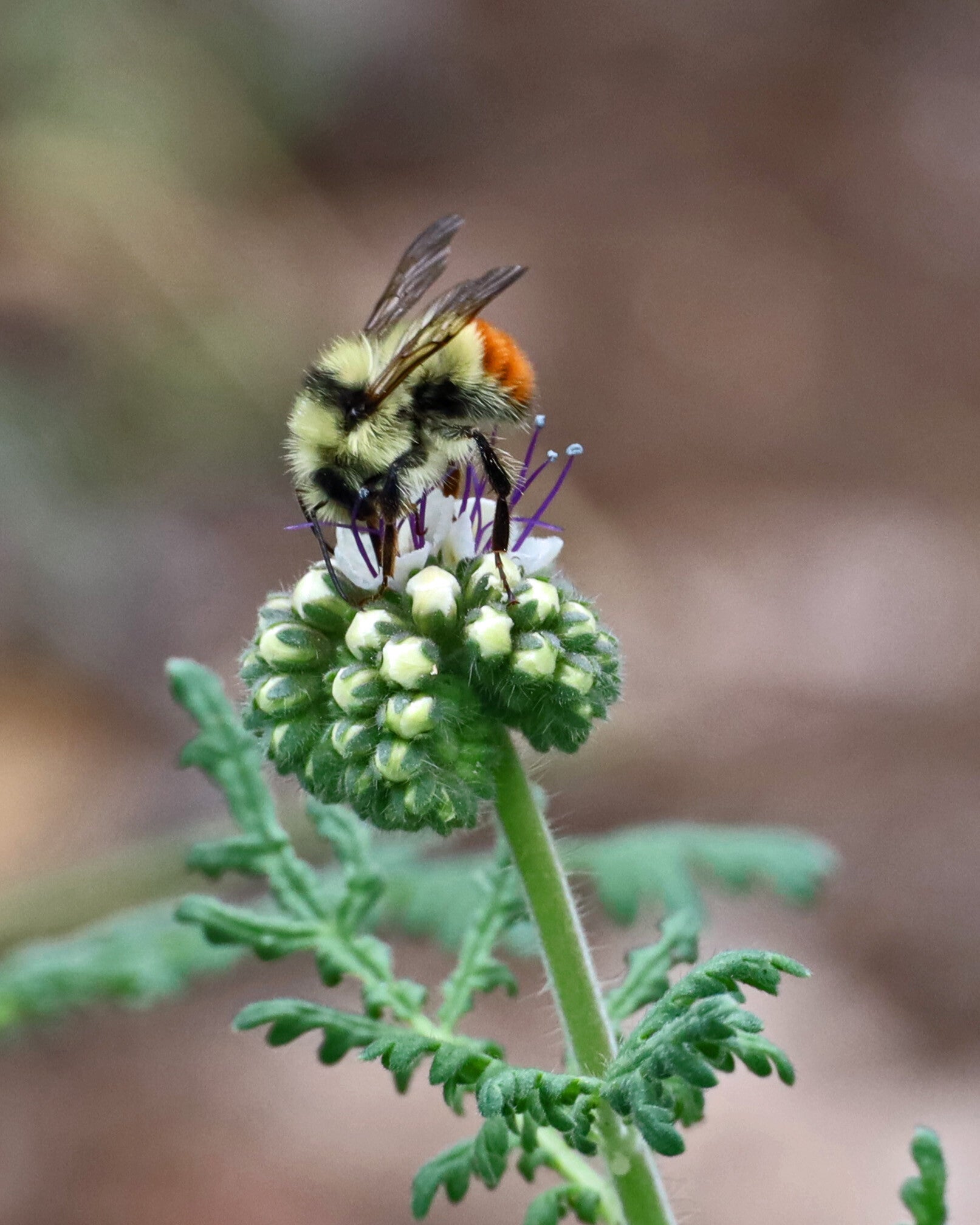
How do native plants reproduce?
Have you ever wondered about the sex lives of native plants? It is easy to understand how mammals like us reproduce. We are mobile moving around freely choosing our mates on the surface of this planet deciding just how and if we want to make zygotes that grow into babies. Plants for the most part are locked into position and depend on an outside source to transfer male gametes (pollen), to the female egg cells to ultimately form zygotes developing into fruit and seeds within the flowers. On Earth plant sex cells are known to be transferred by flies, ants, bees, beetles, moths, butterflies, bats, rodents, lizards, and now possibly a frog. In Colorado pollen is moved primarily by insects and a few hummingbirds. Here we will talk about our Colorado native bees.
There are 20,000 species of native bees on the planet, with approximately 4,000 in North America, and 950 native bees in Colorado. All of these Colorado native bees are attracted to flowers because the pollen is rich in protein, and the nectar offers a sweet, tasty source of energy to the bees. When the bee lands on the flower, the pollen is sticky and adheres to the bee’s body. As the bee moves from flower to flower the pollen is inadvertently placed on the tip of the stigma or female portion of the flower. After the pollen germinates on the stigmatic surface, a pollen tube is formed from the pollen and extends down the style into the ovule; nuclei from the pollen travel through the pollen tube to fertilize the ovule.
Of the 950 species of native bees in Colorado 70% are solitary meaning they do not build social nests like bumblebees or the non-native honeybees. The solitary bees include mason bees (family Megachilidae), Masked bees (family Colletidae), Plasterer bees (family Colletidae), Mining bees (family Apidae), Digger bees (family Apidae),Resin bees (family Megachilidae), and leaf-cutting bees (family Megachilidae). These solitary bees come in sizes from ¼” to ¾” and they emerge in spring and early summer in temperate climates. The solitary bees show different degrees of social interaction between adults including para, quasi, semi and eusocial behavior. Eusocial bumblebees and honeybees evolved later in evolutionary time.
The males emerge first and immediately begin searching for the emerging females. After mating the females chose a nest site and begin the nest construction. There is an amazing diversity of nest construction among all these different solitary bees. About 2/3 of solitary bees dig holes and nest in the ground, and most of the others nest in holes within wood or plant stems that have been carved by beetles or other insects. Different bees will line the holes with an assortment of material including cut leaves, leaf pulp, or tiny little sand grains. One time I observed a leaf-cutter bee in my native garden arrive on an evening primrose and cut a perfect circle from a petal, position it in her mandibles, and fly off only to return in about 90 seconds to cut another perfect little petal circle. I could imagine her lining her tiny little cells with these soft cushy evening primrose petal parts. She creates 5-6 compartments that are complete with a nutritious sticky ball composed of pollen and nectar and lays an egg next to each pollen/nectar ball. Her life duties are now finished, and her life is over. The eggs will typically hatch the following spring, however multiple generations will occur with some native solitary bees.
In Colorado, there are 24 species of social native bumblebees in the Apidae Family, within the genus Bombus. Bumblebee colonies are not as organized as the highly eusocial non-native honeybees that were introduced to the New World about 400 years ago from Europe. Unlike honeybees, adults do not feed each other, although they do feed from common food sources. Additionally, unlike the perennial nests of honeybees, bumblebees are annual and each year the newly emerged bumblebee queen will search for a new nest within a dry cavity that could include an abandoned mouse nest, or below a tussock of grass. The queen produces wax from glands in her body and lays a few eggs to produce worker bees. The worker bees take over the nest building work. If it is a good year for flowers, her nest will be quite large by late summer.
In your garden there are so many ways to help native bees and the most important way is to plant flowers, and adding native flowering plants is even more helpful. Many bees have co-evolved with particular native flowers. Penstemon, columbine, and many native asters are easy to grow in our gardens. You can also add some structures that provide cavity nests for bees, or even boxes that some bumblebees will choose to use to nest within. In late summer and fall it is best to leave the stems of plants for bees to nest in, and let the leaves be on the ground for insects that like to burrow underneath and hibernate throughout the winter such as mourning cloak butterflies. Check out the Xerces Society for excellent suggestions on how to provide nesting resources for native bees and other insects.
https://xerces.org/pollinator-conservation/nesting-resources

All about milkweed. The plant monarchs depend on.
Have you ever noticed the big beautiful tall showy, usually pink flowers often growing along roadside ditches between June and early July in Colorado? The flowers you have noticed are likely milkweed. There are twenty different lovely species of milkweed in Colorado, and seven are quite rare. the San Luis Valley is home to five species of milkweed including: Spider milkweed- Asclepias asperula, Hall’s milkweed- A. hallii, Plains milkweed- A. pumila, and Showy milkweed- A. speciosa.
I have been known to yell “Stop the Car!” on behalf of these amazing flowering native plants. Their flowers typically have petals and sepals, (the green looking leaves under the petals), that curve down or reflex. While looking closely you will see above the petals a so-called corona that consists of five cup-like hoods out of which extend little curved horns. It is the cup like hoods that hold the nectar that attracts the numerous pollinators that visit these flowers. In between those hoods are vertical slits, and each slit opens into a stigmatic chamber. The corpusculum sits above the slits and has two little arms called translator arms that extend inside the chamber. Each translator arm holds a golden package of pollen containing 100’s of pollen grains, called a pollinium. Back at the car, my driver is getting quite impatient with me. Yet I linger because there is much more to observe. Here comes a large bumble bee! As the bee lands on the milkweed flower, it moves from hood to hood on a flower and inevitably a leg may slip into a slit. Lighter weight bees such as honeybees and some flies can be seen struggling to pull a leg out of the slit and are sometimes not successful and get caught and die on the flower. If the bee is strong enough it can pull that leg up, so that it hooks into a groove and pulls the whole pollinarium, (corpusculum, two translator arms, and two pollinia), out of the stigmatic chamber. This story gets even more astounding. Scientists have closely observed what happens when a pollinarium gets carried around by a bee for about 90 seconds. The pollinarium dries out and as it dries the translator arms rotate 90 degrees and puts the pollinium into the perfect position for it to slip into one of those slits while the insect moves over it. This is now the moment that pollination begins. The pollinium is now inside the stigmatic chamber where the nectar is stored, it gets bathed in nectar and swells and within a few hours several pollen tubes grow down the style and into an ovary. Each ovary contains 200 ovules and each needs to be fertilized by a pollen tube nucleus. And in the late summer and early fall you will see the milkweed fruit forming and eventually hundreds of seeds float out of the fruit like little, tiny helicopters. This is another stop the car moment. I like to look at those amazing fruit and seeds so silky and shiny-soft as they float on the wind. Sometimes I will collect a few of the seeds and propagate them in my native landscape. Monarch butterflies depend on milkweed plants to lay their eggs on; it is the only plant that will nourish the monarch larvae. Milkweed have nasty toxins called cardenolides that will make sick and even kill most herbivores that attempt to munch on the leaves. Monarch caterpillars have adapted to these toxins in such a way that they are not at all bothered by the toxins, and when the caterpillars metamorphose into butterflies, the toxins become part of the adult body as well. Amazingly some birds including grossbeaks and orioles have also adapted to the toxins and can feed on the butterflies with no ill harm. Monarch butterflies are on the decline and need our help. Planting milkweed in your landscape is one way to help; another way to help is to add lots of native flowers for the adult monarch butterflies to nectar on as they migrate to and from Mexico.
Indigenous People use milkweed plants for both medicine and structural use. According to Enrique Solomon from the book IWIGARA, “spider milkweed is used to relieve excessive mucus, and as a ceremonial emetic. The milky latex from fresh plants is boiled until it thickens and then used as a chewing gum. The soft fibers inside the pods are used as pillow stuffing and sleeping pads, and the stem fibers are twisted into cordage”. Please to not ingest any part of the milkweed plant as we know it contains toxic poisons.
Next time you are driving down the road and you think you might be seeing milkweed plants, stop the car! You are bound to find something amazing that will enlighten your day. Take some time to add a native milkweed plant to your landscape and watch in amazement as the monarchs find your plants using sensors on their feet, land, and lay tiny little eggs.
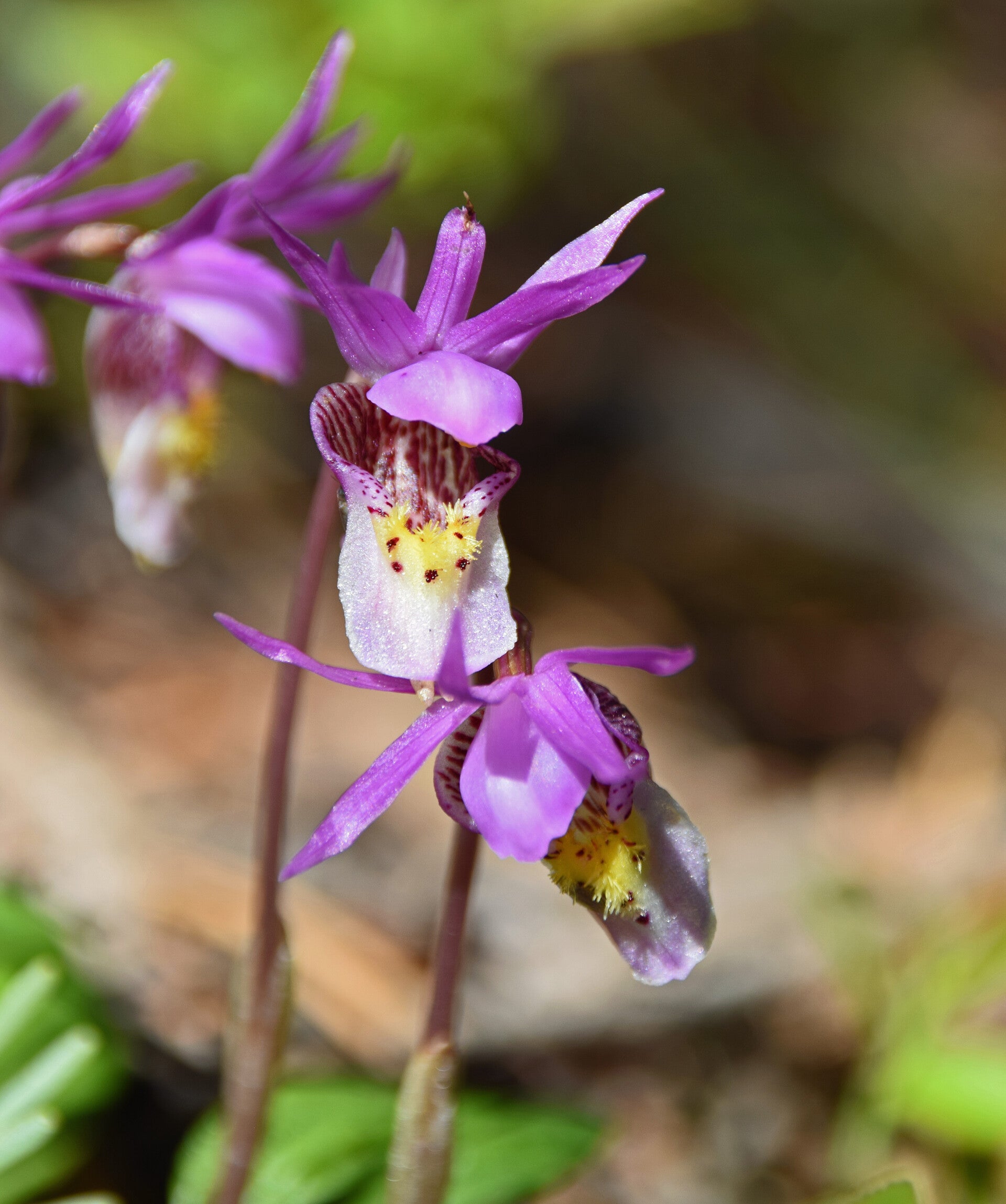
For the Love of Orchids
Orchids first evolved on Planet Earth approximately 84 million years ago along side dinosaurs. There are 28,000 species of native orchids growing on every continent except the Antarctic, making the orchid family- Orchidaceae one of the largest, most diverse, and oldest angiosperm families on Earth. Orchids are exotic, breathtakingly beautiful, and have an extremely complex reproductive system. Most orchid flowers have a central structure known as the column which is a unique orchid adaptation. It contains the fused male (anther) and female (stigma) parts of the flower. The anther is located at tip of the column, and the stigma occurs near the distal end and just on the underside of the column. The labellum, or lip, a modified petal that acts as a landing area for pollinators, is directly below the column. Orchid pollen grains are extremely small and dust-like and are fused together into structures called pollinia. The pollinia occur under the male anther cap and contain a sticky structure called the viscidium. The viscidium helps the pollinia adhere to a pollinator and is eventually and hopefully transferred to the stigma of another orchid flower where pollination can then occur. Orchid seeds are extremely tiny and depend on fungus to germinate; some orchids continue to depend on fungus for their entire life. Orchids that depend on fungus do not contain chlorophyll and are called saprophytes. Many of us have only seen tropical orchids for sale in grocery store floral departments and are surprised to learn that native orchids grow in the wilds of Colorado. Two hundred orchid species occur in North America, 26 species occur in Colorado, and approximately 13 orchid species in the San Luis Valley. Coralroot orchids are saprophytes with yellowish-brown or purplish stems. The branching roots called rhizomes resemble coral, and the genus Corallorhiza is named for this resemblance. As you explore hiking trails in moist shaded forest areas in the San Luis Valley, you may encounter orchid species within this genus including spotted coralroot- Corallorhiza maculata, striped coralroot- Corallorhiza striata, yellow coralroot- Corallorhiza trifida, or spring coralroot- Corallorhiza wisteriana. One of my favorite orchids is the fairy slipper orchid- Calypso bulbosa, (named for the Greek sea nymph of Homer’s Odyssey), which grows deep within pine/spruce forests along streams between 7,000- 10,500’ elevation. This is a small showy orchid that will have you mesmerized in time if you are lucky enough to be standing in its presence. The giant helleborne orchid- Epicactis gigantea is Colorado’s largest orchid and found in hanging gardens, marshes, near hot springs, and on seepy slopes between 4,800’-8,000’ elevation. Rattlesnake plantain- Goodyera oblongifolia is an orchid easily missed in shaded forests and along streams between 6000’-10,700’ elevation. The basal leaves of this pretty little orchid are dark green with white midrib veins. Fringed orchids occur in the genus Platanthera, and there are at least 5 species of this orchid in the San Luis Valley including the northern green orchid-Platanthera aquilonis, Huron green orchid- Platanthera huronensis, blunt-leaved orchid- Platanthera obtusata, purple petal bog orchid- Platanthera purpurascens, and the stream bog orchid- Platanthera tescamnis. The petals of these species vary in color from white to green, and yellowish green and grow in moist meadows, forests and along stream or creek banks. Finally, you may be lucky enough to bump into a hooded lady’s tresses orchid- Spiranthes romanzoffiana. This is a fabulous small white orchid that likes to grow in moist meadows and forests, along streams and lake borders, and in fen areas between 5,000’-11,000’ elevations. Some of you are aware of the showy tropical orchids and enjoy growing them in your home and offering them as gifts. And now you know these amazing highly adapted flowers that have intrigued botanists for centuries, also grow native all around you in the forests, meadows, along streams, and within wetlands all over Colorado and the world. It is a family of plants well worth learning more about.